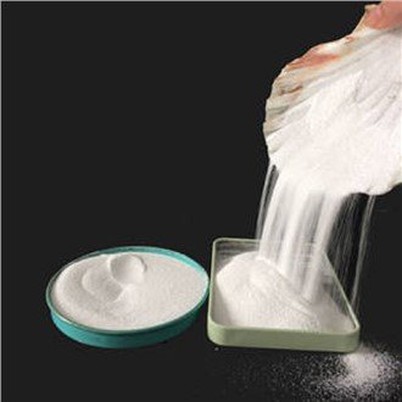
Physical and chemical properties of polyvinyl chloride resin
Leave a message
The natural color is light yellow, translucent and shiny. The transparency is better than that of polyethylene and polypropylene, but worse than that of polystyrene. Depending on the dosage of additives, it can be divided into soft and hard PVC. Soft products are soft and tough, and feel sticky. Hard products have higher hardness than low-density polyethylene. Below polypropylene, whitening occurs at the inflection point. Stable; not easy to be corroded by acid and alkali; relatively resistant to heat.
PVC has flame retardant (flame retardant value above 40), high chemical resistance (resistant to concentrated hydrochloric acid, 90% sulfuric acid, 60% nitric acid and 20% sodium hydroxide), mechanical strength And the advantage of good electrical insulation.
Polyvinyl chloride has poor stability to light and heat. The softening point is 80°C, and decomposition starts at 130°C. Without heating the stabilizer, polyvinyl chloride begins to decompose at 100°C, and decomposes faster above 130°C. It is decomposed by heat to release hydrogen chloride gas, (hydrogen chloride gas is a toxic gas) to make it change color, from white → light yellow → red → brown → black. Ultraviolet rays and oxygen in sunlight will cause photo-oxidative decomposition of polyvinyl chloride, thus reducing the flexibility of polyvinyl chloride and finally becoming brittle. From here, it is not difficult to understand why some PVC plastics turn yellow and brittle after a long time.
It has stable physical and chemical properties, is insoluble in water, alcohol, gasoline, and has low gas and water vapor leakage; at room temperature, it can withstand any concentration of hydrochloric acid, sulfuric acid below 90%, nitric acid below 50-60% and 20% below. Caustic soda solution has a certain resistance to chemical corrosion; it is quite stable to salts, but can be dissolved in organic solvents such as ethers, ketones, chlorinated aliphatic hydrocarbons and aromatic hydrocarbons.
Industrial polyvinyl chloride resin is mainly amorphous structure, but also contains some crystalline regions (about 5%), so polyvinyl chloride has no obvious melting point, and begins to soften at about 80 °C, and the heat distortion temperature (under a load of 1.82MPa) is 70-71 ℃, under pressure 150 ℃ began to flow, and began to slowly release hydrogen chloride, resulting in polyvinyl chloride discoloration (from yellow to red, brown, and even black).
The weight-average molecular weight of industrial PVC is in the range of 48,000-48,000, and the corresponding number-average molecular weight is 2-19,500. The weight-average molecular weight of most industrial resins is 100,000-200,000, and the number-average molecular weight is 45,500-64,000. Rigid polyvinyl chloride (without plasticizer) has good mechanical strength, weather resistance and flame resistance, and can be used alone as a structural material for chemical manufacturing of pipes, sheets and injection molded products. Rigid PVC can be used as reinforcement.